UNDERSTANDING BITCOIN
What is Bitcoin?
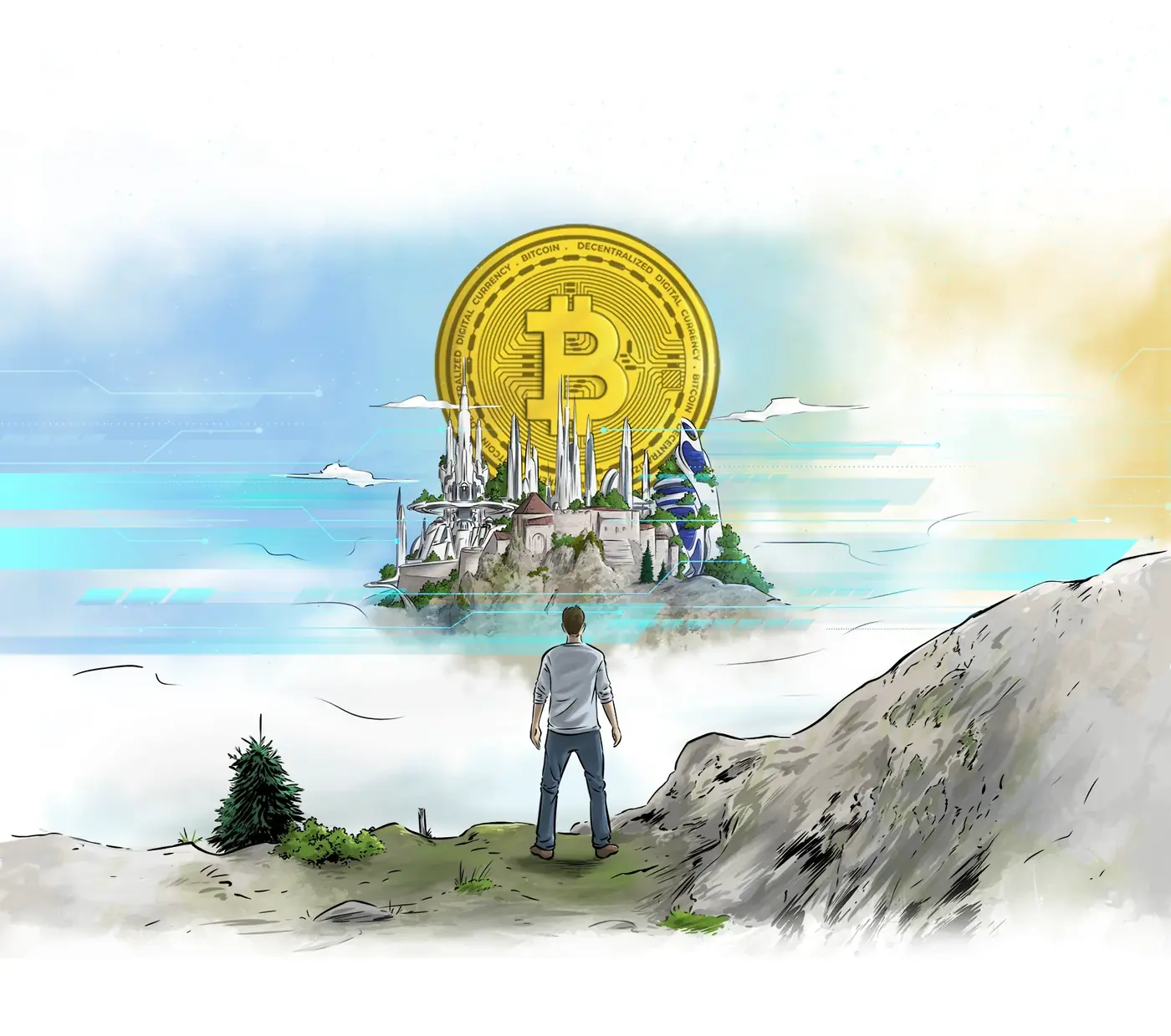
Bitcoin is a peer-to-peer digital currency launched in 2009 that works without banks or intermediaries. With a wallet and a personal key, anyone can hold their own bitcoins and be the only one able to authorise their movements, provided they learn to protect that key.

A REVOLUTION
What Bitcoin has changed
Since its launch in 2009, after more than thirty years of experimentation, Bitcoin has sparked an unprecedented financial revolution, giving individuals unmatched control over their money.
Bitcoin offers a decentralised alternative to traditional banking systems, allowing anyone to become their own bank.
This peer-to-peer digital currency guarantees full individual sovereignty: no intermediaries are needed to transact, whether locally or globally.
Bitcoin protects against censorship, runaway inflation and arbitrary monetary policy, offering economic freedom to those seeking to escape the constraints of centralised institutions.
By adopting Bitcoin, anyone can take back control of their financial future, build their wealth independently and take part in a truly inclusive global economy.
Bitcoin and inflation.
Unlike traditional currencies, Bitcoin has a supply capped at 21 million units, set from the very beginning. This is why many individuals, companies and institutions now regard it as a store of value. Since 2009, its historical growth has outpaced that of gold and major stock indices, at the cost of very high volatility.
Educational information only. Past performance is no guide to future performance. La Citadelle does not sell bitcoins and does not provide any investment advice.
OUR MISSION
Your money, your keys, your control.
Tomorrow's exchanges are being prepared today. Since 2009, Bitcoin has permanently changed the way we exchange value around the world.
But discovering Bitcoin is not just about buying a few euros' worth of bitcoin in an app. It is essential to understand how this technology works and, above all, how to stay in control of it.
Why should you never leave your bitcoins on an exchange?
When you buy bitcoins on an exchange, you may be tempted to leave them in your account. Yet this means you depend on that company to access your money.
If it runs into difficulties, gets hacked or decides to freeze withdrawals, you may find yourself unable to access your bitcoins. It is a serious risk that is best not taken lightly.
What if you could hold your bitcoins yourself?
That is precisely Bitcoin's main value proposition. Unlike traditional banking, Bitcoin lets anyone keep direct control of their money: this is self-custody.
With a secure wallet and a personal key, you can be the only one able to authorise movements of your bitcoins. This key is your property. It gives you control of your funds, without asking permission from a bank or an exchange.
But this freedom also comes with responsibility: you need to learn how to properly protect this key and its recovery phrase.
How do you secure your bitcoins?
In practice: move your bitcoins off exchanges, use a hardware wallet that keeps the keys offline, back up the recovery phrase on a durable medium, never photograph or share it, and work on clean devices. This is exactly what the REMPART package sets up.
La Citadelle supports you at home
I created La Citadelle with one conviction: everyone should be able to discover Bitcoin and learn to use it under the best security conditions. I specialise in installing Bitcoin vaults in people's homes. I personally guide you in choosing your hardware, installing it, configuring it and learning to use it.
You don't need to be an IT or finance specialist. My role is to explain each step in plain language and help you gradually become independent. Sessions are held in French, or in English on request.
It is essential to position yourself today in the exchanges of tomorrow. And that starts with learning to truly own what you buy.
La Citadelle: your vault, your Bitcoin, your freedom.
TAKE BACK CONTROL OF YOUR DIGITAL LIFE
Two internets, two sets of habits
The internet of communication
Secure your communications and protect your data with ethical tools that respect your privacy.
The internet of value
Lay solid foundations or improve your existing setup with the right tools and the right habits.
Further reading: bitcoin.org (reference website), our Bitcoin glossary and our frequently asked questions.